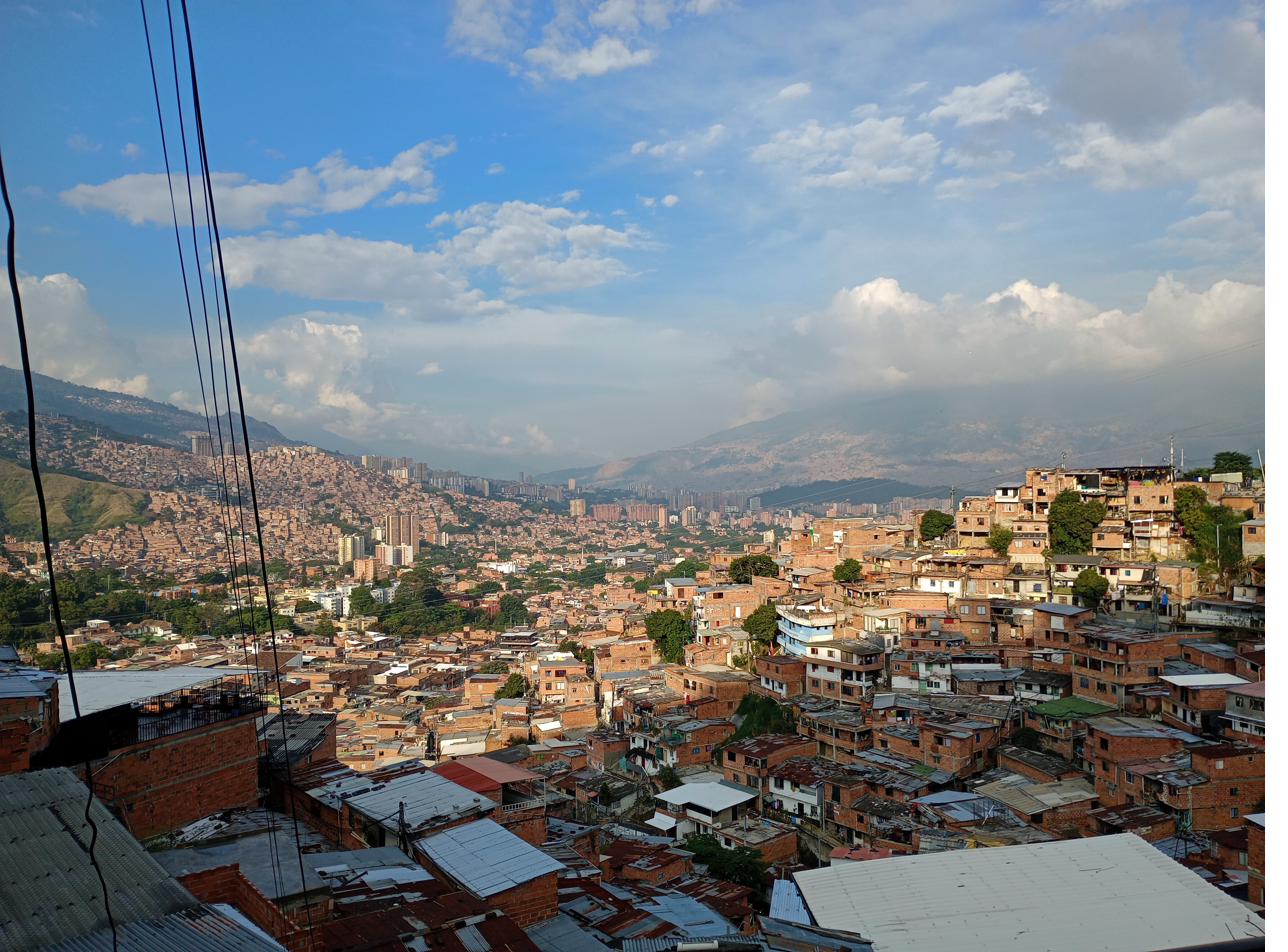
This chapter separates sourced historical facts from interpretation. It does not glamorize violence or portray today’s city as free of risk.
Cartels, terror and the people caught in between
From the late 1970s into the early 1990s, cocaine trafficking, the Medellín cartel, bombings, assassinations and armed conflict brought extraordinary violence. Police, judges, journalists, politicians and ordinary people were targeted. Many residents changed routes, routines and expectations simply to survive.
1991: a devastating peak
Medellín’s city council reports 6,809 homicides in 1991. Different datasets have sometimes been cited, so a statistic without its source can mislead. Behind every number was a person, a family and a community living with fear and loss.
1993 was not the end
Pablo Escobar was killed in December 1993. That did not end the city’s violent history. Criminal factions, guerrillas, paramilitaries and state operations shaped the decade that followed, especially in communities too often omitted from international coverage.
Comuna 13 and the need for historical care
The fighting and military operations of the early 2000s, including Operation Orión, left enduring questions about disappearances, civilian harm and accountability. Public murals and tourism cannot substitute for the testimony of victims or the search for missing people.
Why we reject the gangster souvenir version
We do not tell this story to make a drug trafficker heroic or to sensationalize atrocities. The people who endured the violence deserve the foreground. For visitors curious about this history, a museum of memory and well-sourced reporting offer a better place to begin.
“You cannot appreciate the scale of the transformation without first confronting the real scale of the suffering.”