This chapter separates sourced historical facts from interpretation. It does not glamorize violence or portray today’s city as free of risk.
Before the city had a name
Indigenous communities lived in the Aburrá Valley long before Spanish expeditions reached the region. Its rivers, fertile land and connections to the surrounding mountains made it home long before Medellín existed as a colonial municipality.
1616 is not the whole founding story
In 1616 the settlement of San Lorenzo de Aburrá was established in what is now associated with El Poblado. The Villa de Nuestra Señora de la Candelaria de Medellín was formally established on November 2, 1675. Both dates matter, but they describe different historical events.
Factories, coffee and the making of a commercial city
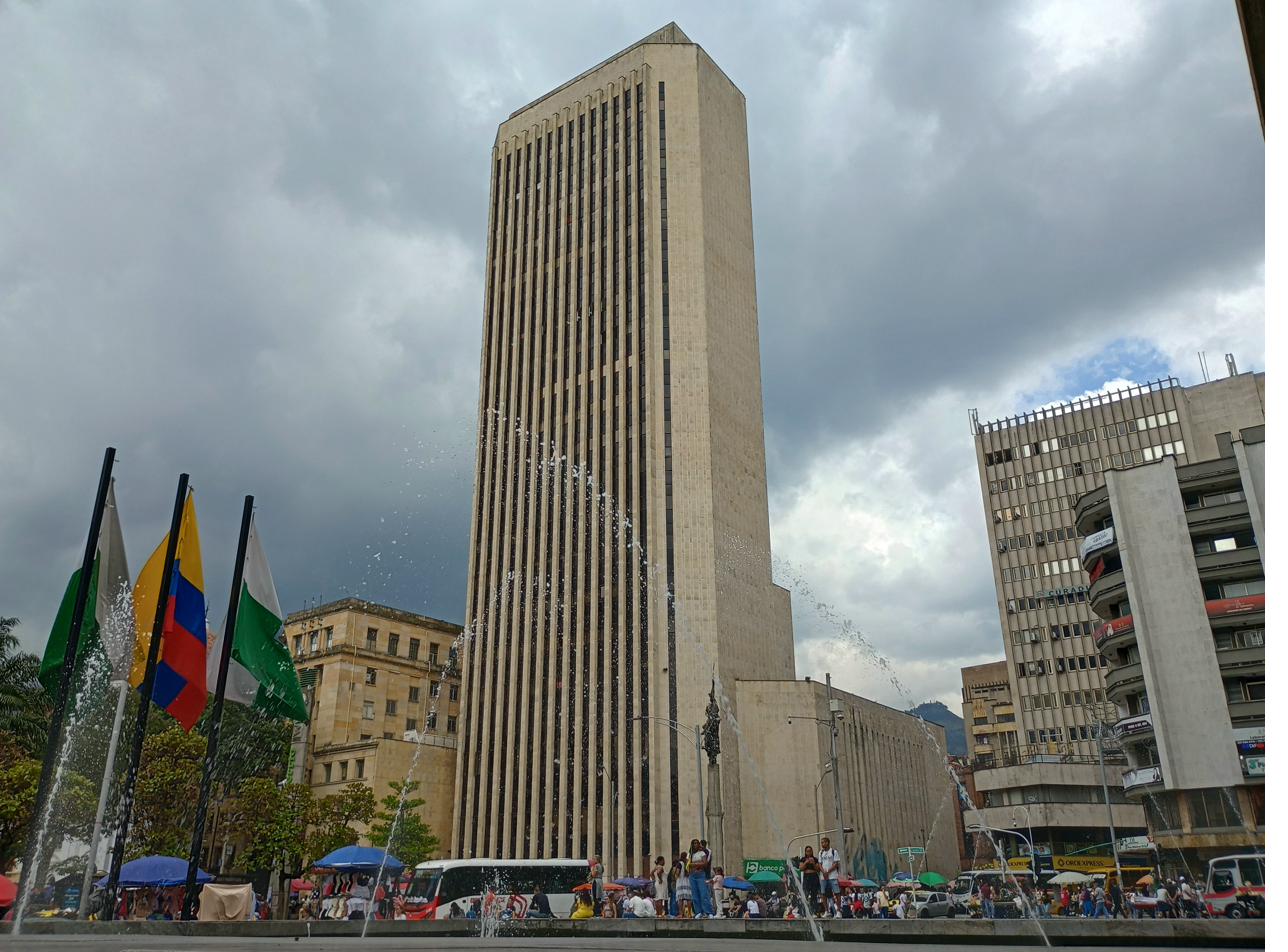
As regional trade expanded, Medellín became known for textiles, commerce and entrepreneurial networks. Coltejer, founded in 1907, became emblematic of industrial Medellín. The striking Coltejer tower, completed in the early 1970s, still signals a city built by industry, not just shaped by violence.
A downtown with its own memory
Parque de Berrío, Junín, traditional churches, markets and cinemas were part of a city that many residents remember vividly. Those places provide a more revealing starting point than a cartel documentary: they show what everyday people had built, and therefore what was endangered later.
“Before Americans learned to fear the name Medellín, the city had already spent generations building a distinct civic and commercial identity.”